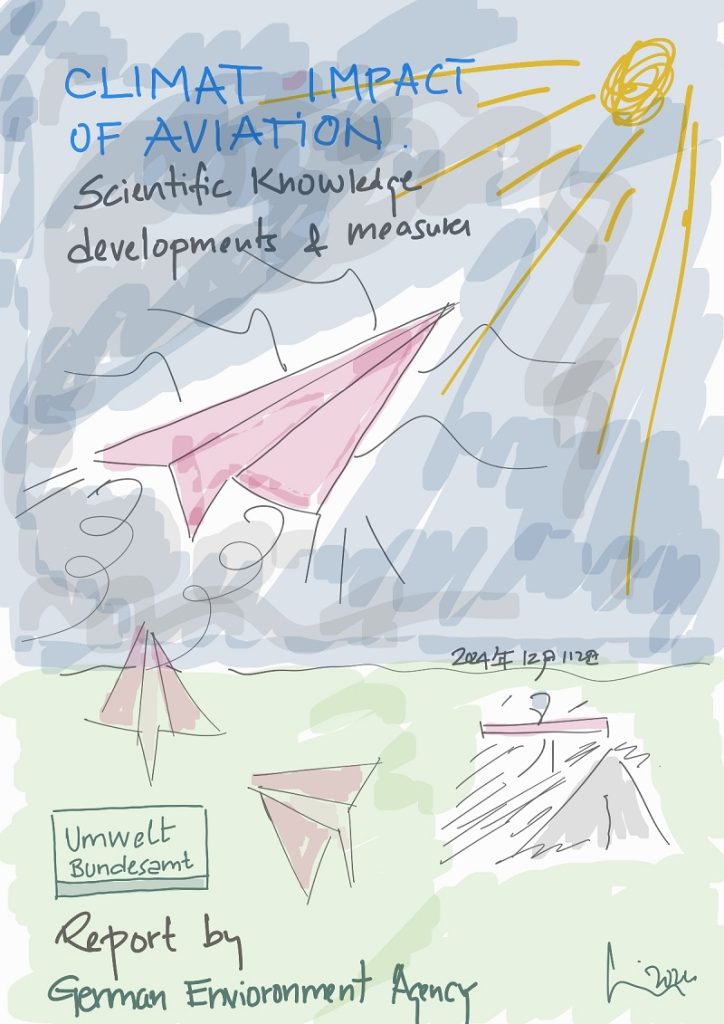
Aviation’s impact on climate change extends beyond carbon dioxide emissions, encompassing a range of non-CO2 effects that play a significant role in the industry’s overall climate footprint. According to the German Environment Agency’s report, while aviation contributed approximately 2.5% of global man-made CO2 emissions in 2018, non-CO2 effects account for about two-thirds of the total climate impact when considering cumulative effects of past emissions. These non-CO2 effects primarily include contrail cirrus formation, ozone production from nitrogen oxide emissions, and changes in methane concentration. Contrail cirrus, in particular, has a strong but short-lived warming effect that can be greater than CO2 in the short term.
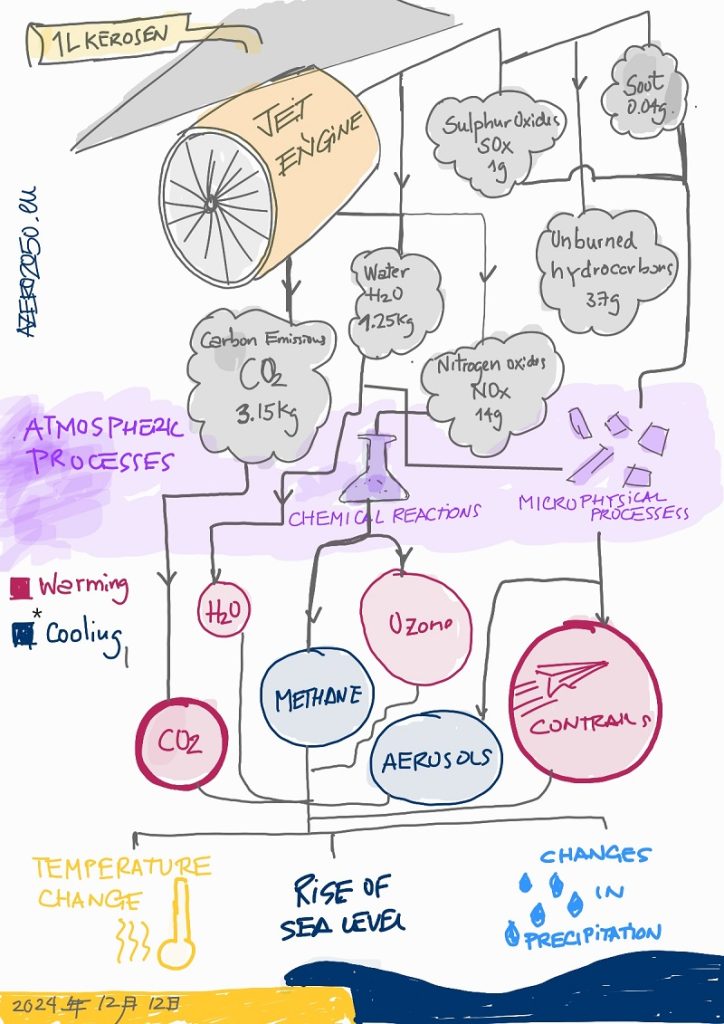
The climate impact of aviation is complex and depends on various factors, including emission location, altitude, and atmospheric conditions. Different climate effects operate on different timescales, making direct comparisons challenging. For instance, CO2 has a long atmospheric lifetime and accumulates over time, accounting for about one-third of aviation’s total climate impact. In contrast, contrails and contrail cirrus have a strong but short-lived (net) warming effect. Nitrogen oxides lead to ozone formation (warming) and methane reduction (cooling), with an overall warming effect. Water vapor has a minor direct effect but contributes to contrail formation, while aerosols have both direct and indirect effects with an uncertain but potentially cooling impact.
Addressing aviation’s climate impact requires a multifaceted approach that considers both CO2 and non-CO2 effects. Mitigation strategies include improving aircraft efficiency through better aerodynamics, lightweight construction, and more efficient engines; developing alternative fuels like sustainable aviation fuels (SAF) and potentially hydrogen; optimizing flight routes and altitudes to reduce non-CO2 effects, especially contrail formation; and implementing political measures such as emissions trading systems and SAF mandates. Achieving climate-neutral aviation will necessitate a combination of technological advancements, operational improvements, and policy measures. However, the long lifespan of aircraft and slow fleet turnover present challenges for rapid implementation of new technologies, underscoring the need for immediate and sustained action across the industry.
Source:
German Environmental Agency. (2023). CLIMATE IMPACT OF AVIATION Scientific knowledge, developments and measures. https://www.umweltbundesamt.de/sites/default/files/medien/479/publikationen/fb_climate_impact_of_aviation_0.pdf